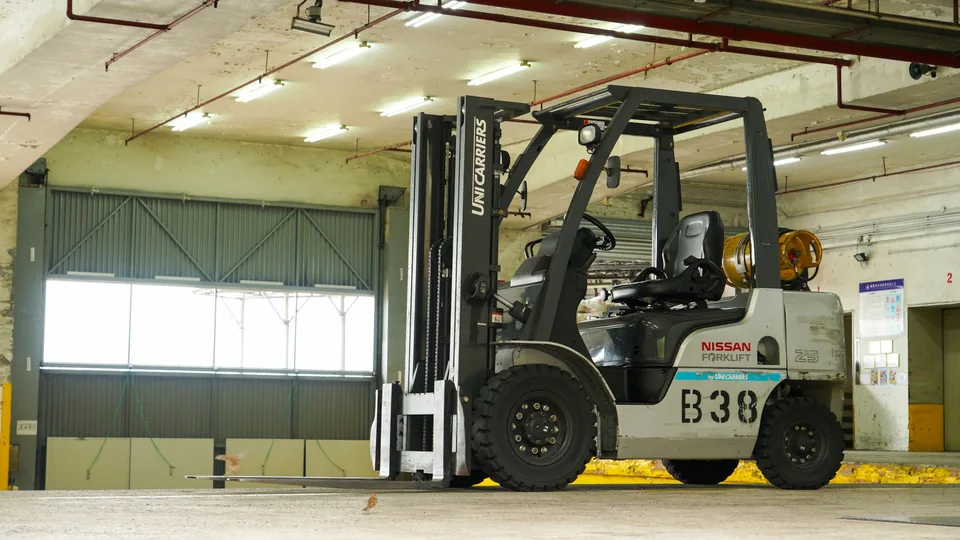
Find the right forklift for your Toronto operation
Toronto's commercial and industrial areas include distribution and manufacturing operations. For a buyer working in an existing building, the first constraint may be access rather than lifting capacity. Record the lowest door opening, the mast's collapsed height and the space available to turn with your largest load. A compact truck can still be unsuitable if its overhead guard, mast or turning envelope does not fit the receiving route.
What to confirm before you buy
Separate routine pallet work from occasional heavy or oversized items before comparing used forklifts. Supply the heaviest load's weight and dimensions, the required lift height and any attachment. Ask for a readable capacity plate and a condition assessment of the proposed machine. For indoor work, compare electric equipment alongside charging space and shift requirements; review ventilation and exhaust exposure before considering combustion-powered equipment.
Constrained receiving areas
Compare overall dimensions and loaded turning clearance against a measured plan of the loading entrance and first storage aisle.
Mixed pallet sizes
Share standard pallets and the awkward loads separately so fork length, spread and attachment needs are assessed together.
Shared industrial buildings
Confirm floor loading, pedestrian separation and any landlord or building restrictions before selecting a truck.